That said, it is less relevant with regard to heritage assets.
David Behan, Mechanical Engineer and Founding Director of Etch Associates noted: “I think data is a critical point, because I don’t think there’s enough great examples of historic building refurbishments.”
Our industry is getting really good at developing new builds where we capture and use positive data that tells us that they are going to be low or zero-carbon throughout their life cycle. We are not in that position for heritage buildings, because we cannot influence all the materiality that were used to build them.”
Tim Clement still felt there is still huge potential for gathering data on heritage buildings via digital twinning, which could bring confidence into retrofit decision-making.
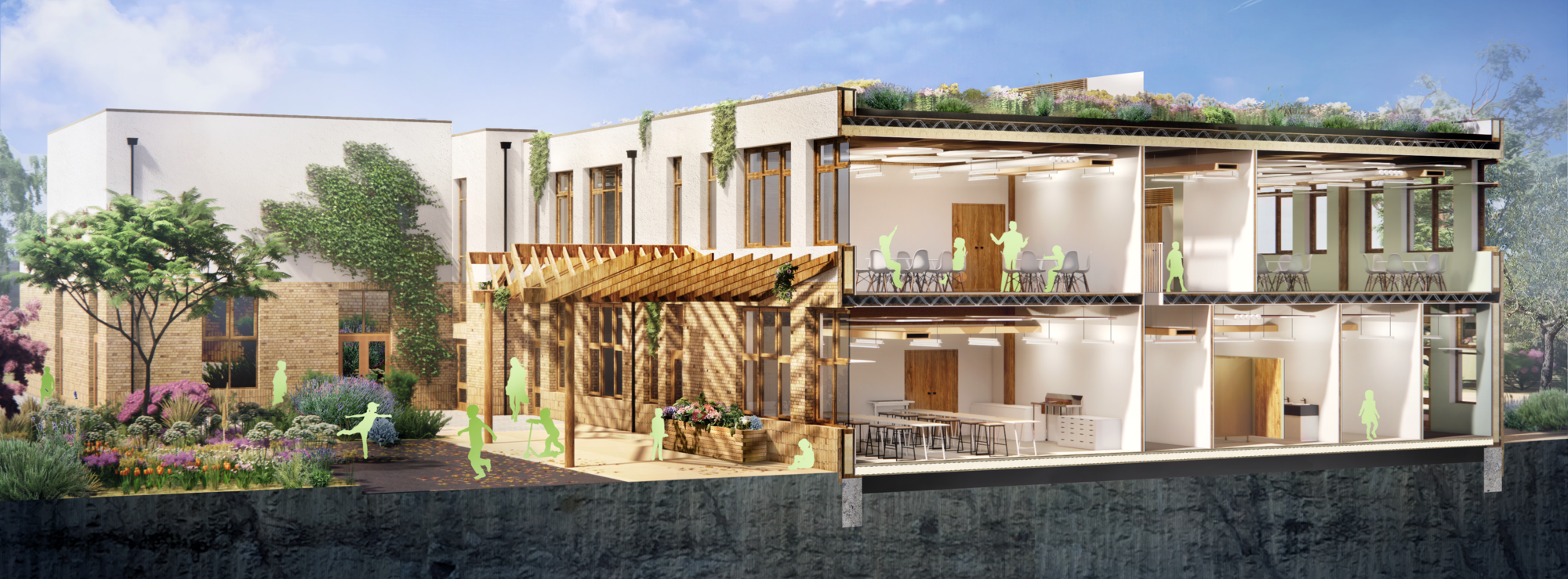
He referenced Morgan Sindall’s Circular Twin project – a thought leadership exercise that saw it collaborate with four industry partners on a research project to demystify and evidence the true costs and benefits of a more sustainable approach.
The landmark study involved building a virtual school based on one that has already been completed.
The project partners - procurement specialist SCAPE, architects HLM and Lungfish and the engineering consultancy Cundall - reworked the scheme from start to finish so that each decision and design choice favoured a lower carbon outcome.
The team made decisions based on the modelled lifecycle carbon of the building, not cost.
Capital and operation costs were evaluated and forecast, but carbon was the key driver. This allowed the traditional ideas of value defined by cost to be challenged and invited the assembly of the project team, and their behaviours, to change – ultimately helping to achieve long-term cost savings through operational efficiency.
The results were striking: in comparison to the original school – built in 2017 - Circular Twin achieved a 67% reduction in Whole Life Carbon, with capital expenditure CAPEX delivered within standard budgetary parameters.
Design proposal for the Circular Twin project
When considering if the same digital twinning process could be applied to a heritage building, Nick Brown said he had considered twins on new builds in the past, but even here can prove as disproportionately expensive.
But in principle if we could establish sufficient data on these heritage buildings, and at reasonable cost, it could pay dividends in the long run, but the challenge is not to be underestimated.
If you begin to build up your data, then surely the case is exactly what happened with global warming – the modelling took time, but it eventually backs the theory.”