Case Studies
Client: Birmingham City Council Value: £17m Duration: 16 months
Scope of works:
Located in Birmingham, the new development comprises of a three-storey main building which houses five specialist laboratories, three IT classrooms and 15 general teaching rooms, including a learning resource centre, a reflection hall for prayer and a state-of-the-art catering facility.
External play provision included a multi-use all weather pitch, a 40-space car park, that included disabled and minibus parking and four electric car charging points, and a four-court sports hall.
Fly over Eden Girl's School
Due to a high demand for student places in the Small Heath area, Birmingham City Council commissioned us to design and build the new Star Academies Islamic faith girls’ school which has now created 600 school places for Muslim-faith female students.
There was an urgent need to progress with the design and construction, as the existing Academy in Birmingham's city centre was failing to meet standards and was under critical review. Because the original school was unfit for use, we were also tasked by the council to build a two-storey modular temporary school near site to ensure continuity of the student’s education during the building process.
In order to move rapidly with the programme of the new build, we used our MySchool solution to fast track the design stage, allowing us to progress with the project efficiently.
Within less than 24-hours of the challenges being presented to us, we brought in our equipped MySchool teams to immediately implement a series of workshops to help speed up the process.
Our MySchool system has been the result of 12 years of development, investment and expertise in delivering automated design and repeatable standardised solutions. It is a design solution which offers the speed and cost-effectiveness of a pre-designed model, but with scope to add bespoke, flexible elements.
Birmingham City Council had no end client at the time, however, late on in the programme, the school was awarded to Star Academies.
Despite coming into the process late, we were able to utilise the flexibility of the MySchool solution to tailor the school’s structure to Star Academies’ strict standards and branding requirements - such as doubling the height in the reflection hall for prayer, all without impacting the final cost.
MySchool is our intelligent digital platform-based design tool that is the result of 12 years of research and development, investment and expertise in delivering standardised solutions. Recognising the education system’s need to scale at speed, MySchool reconfigures several main components while enabling us to design a building that meets the unique needs of each school.
The MySchool system gives you the freedom to choose between traditional, volumetric and panel structures, all while offering considerable time savings both at pre-construction and on-site, as well as added cost-efficiency.
Client: Manchester Metropolitan University Value: £46m Duration: 30ms
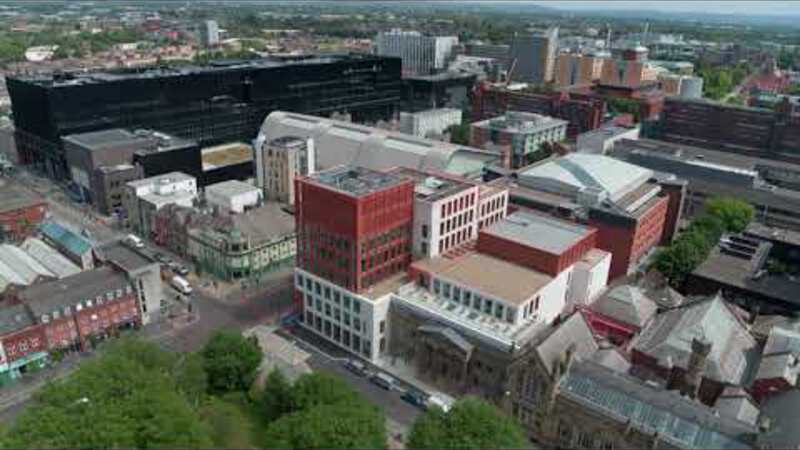
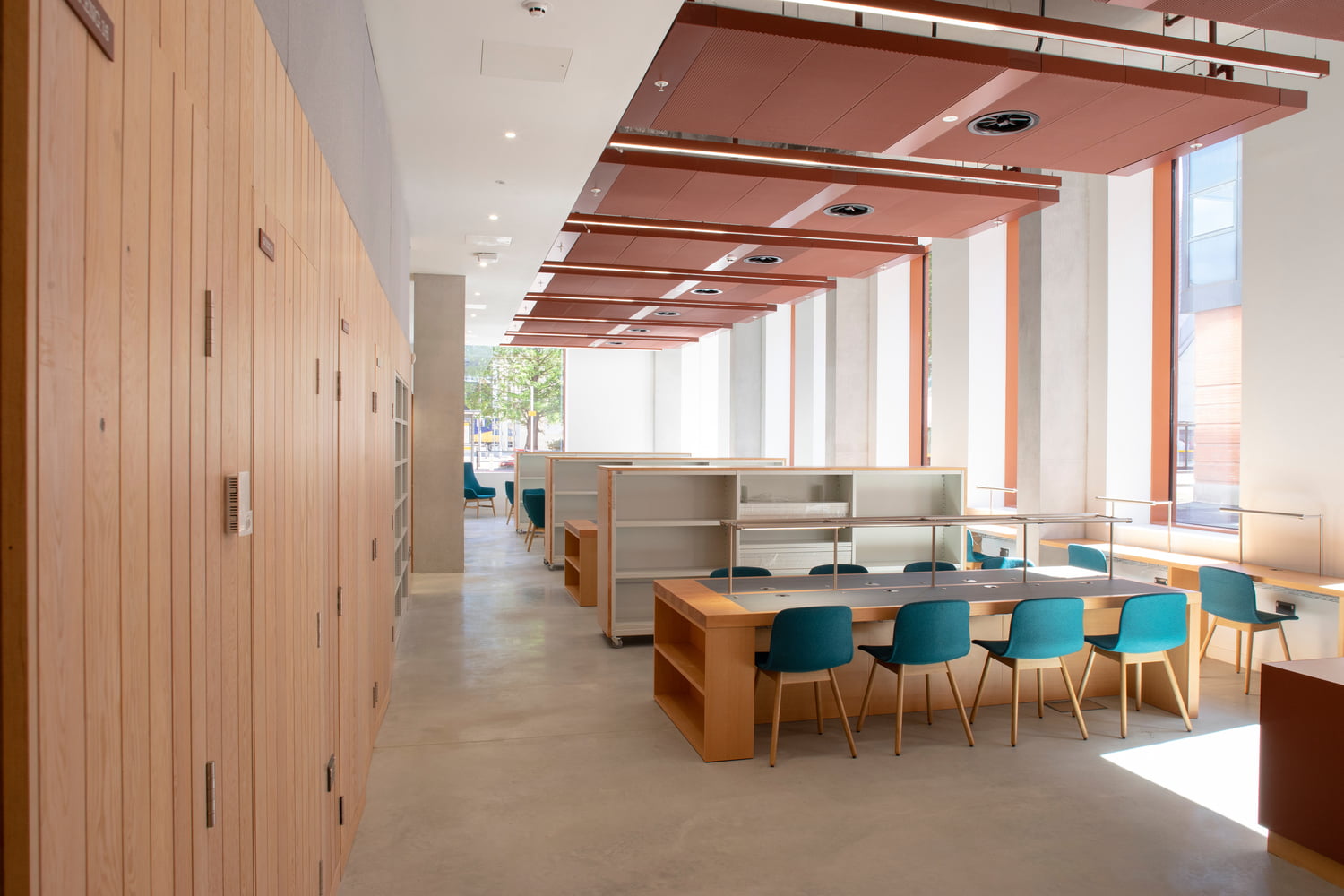
A new home for MMU's faculties of Acting, Humanities, Languages and Social Sciences. Reaching seven storeys at its highest point, and with a retained Grade II listed façade, the old blends with the new to provide a 13,000 sqm facility which includes a high specification theatre at its core with state-of-the-art performance, recording and audio spaces throughout.
4D planning to continually optimise the programme and plan
QR codes enabled us to share BIM model buildings with stakeholders and be viewed from any smart device
An outdoor Digital Information Board provided the public with contemporary project information and data
Laser scanning enabled us to accurately coordinate and design the new elements with the retained structures
360° images taken throughout created an smart photo-album which added collaborative planning and problem solving
Using digital construction tools, such as BIM Level 2, we designed a new site at the Manchester Metropolitan University (MMU) that was in-line with the building’s current Grade II Listed status.
Not just having to overcome the challenges of COVID-19 and the management of multiple University stakeholders, this Manchester city centre project was located along Europe’s busiest bus routes.
On top of this, there were major demolition works and construction happening next to two Grade II Listed structures which led to many complex hybrid structural solutions being required. Plus, due to the end use of the building, specialised ‘Box-in-box construction’ was needed for spaces with acoustic/ vibration needs.
To resolve the project and site constraints, the scheme was designed and delivered using BIM Level 2. This provided greater programme certainty to the stakeholders and helped everyone to understand interface complexities.
We used advanced 3D laser scanning to digitally capture the listed façade in infinite detail and then undertook a point cloud survey to accurately locate and analyse the building’s geometry. This was then integrated into the BIM model and carefully coordinated with the new building design.
These digital tools helped us identify complexities such as the contiguous piled basement retaining walls and permanent steel restraint connections into the rear of the façade. While others such as 3D modelling proved crucial for coordinating the complex Mechanical, Electrical and Plumbing (MEP) design.
As the building is home to many specialist spaces such as the Theatre, TV and Radio Studios, there are a number of large, heavily serviced risers running vertically through the building. Using the detail provided in the models, we were able to identify opportunities for where Modern Methods of Construction could be used. The use of prefabricated MEP modules were identified and designed for both risers and primary corridor routes. The risers were prefabricated off-site in 2-storey height modular sections and lifted into the building, improving the quality and safety of installation and saving eight weeks to the programme.
Virtual working also played a part towards the end of the project, as completion took place during the first Covid-19 lockdown. The team quickly defined and implemented ‘new normal’ working practices, including handover tests and training using virtual technologies.
Thank you for all the efforts made by Morgan Sindall Construction to bring the Building to completion on 29 May. I'd like to make a special mention also of the project manager who went above and beyond, latterly in very difficult COVID-19 conditions, to progress the Building. We are delighted with the Building and look forward to welcoming you in due course to some of the exciting events we are planning to hold there.
Our commitment to Digital Construction, underpinned by our company philosophy of Perfect Delivery, has connected people, process and technology; improved consistency; enhanced decision making; and reduced risk for our customers at the design, construction and operation stages of our projects.