Case Studies
Scope:
A study that brought together industry experts at stages of a project they wouldn’t normally be present for, giving them more time to think about the impact their solutions are having on the planet and to create sustainable alternatives.
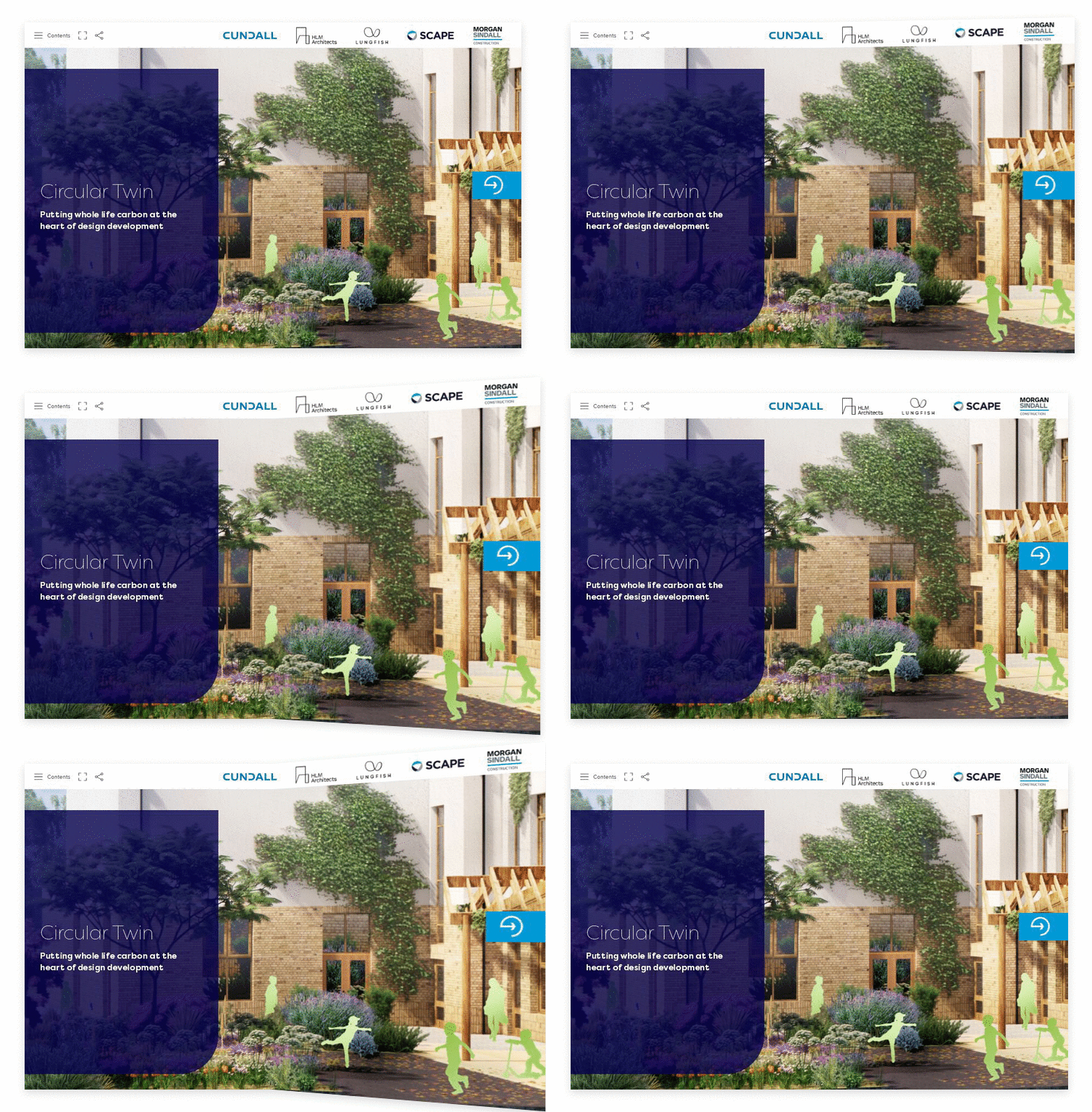
In partnership with SCAPE framework, Lungfish Architects, HLM Architects and engineering consultant Cundall, we created the Circular Twin project. This was a landmark digital study that delved into the traditional procurement and design process of a school built back in 2017, and sought out enough changes that helped to make a big difference to the building’s carbon output.
Needing to address the climate emergency, a step-change in behaviours is urgently required if the industry is truly intent on dramatically reducing its negative impacts on the environment.
Understanding that the task was much greater than ourselves, we knew we would have to get industry leaders involved to overcome the misconception that low carbon construction methods are expensive.
The study brought together all those involved in a construction project, but at stages they wouldn’t normally expect to be, to create a change in the industry and the future of our planet.
For example, the engineering and architectural teams had greater access to the supply chain, much earlier in the process - typically these conversations would happen later on. This shone a light on the expertise within the supply chain and proved that real-time information on design, buildability, cost and crucially carbon could be discussed at RIBA Stage 1.
Overall, this new way of doing things gave the team more time to think about the suitability of their products vs their carbon output.
The team applied their methodology to a two-form entry school built in 2017, and the results were industry-leading:
This project demonstrates that making a contribution to saving the planet doesn’t have to cost the planet.
A step change in behaviours is urgently required if the industry is truly intent on dramatically reducing negative impacts on the environment. It brings to life the latest industry thought leadership and guidance on how the industry can mobilise to reduce its carbon impacts. It is an exemplar of collaboration that challenged learned behaviour, disrupted traditional processes and brought the supply chain to the heart of the design decision making process.
The research is just the start and part of a long process our business to set open and transparent dialogue in the industry about carbon savings, how they can be made and importantly the impact they’ll have to the future sustainability of our communities.
This initiative has uncovered a revelation - that low carbon construction is inhibited by our industry’s reliance on traditional design and procurement approaches. The outcomes show that achieving low carbon buildings IS possible today.
This study brings together experts from the public and private sectors to look at the factors that make up a truly great SEND school and examine how the delivery pathway could be enhanced to secure improved outcomes for every young person with SEND.
Wanting to delve deeper into the delivery of a SEND school, we launched a whitepaper called Building Better Futures based on two key commitments: 1. To create a knowledge form 2. Design a blueprint for success
Read it below:
The needs of pupils with autism and learning difficulties is constantly changing and the number of children and young people entitled to funding for further support for complex educational needs has risen - from 240,000 to 320,000 since 2015. Yet, the budget for the high needs block has only increased by 6% over the same period, from £5.6 billion to £6 billion in today’s prices.
We brought together insights and recommendations from representatives from local authorities in Norfolk, Suffolk, Essex and Cambridgeshire; head teachers from leading SEND schools across the region; architects, designers, and consultants with extensive SEND school delivery experience; representatives from national bodies including the National Autistic Society; and parental support groups including Sensational Families.
The report explores models of best practice in SEND school delivery and includes suggestions for shaping future design and delivery of SEND schools, which will better meet the needs of this fast-growing cohort of pupils.
Flexibility is key - Effective building and classroom design is a crucial element in learning and schools and delivery teams need to consider a wide range of issues.
Bring end users on the journey - Delivery teams must engage with users and equip teachers with the tools to communicate the development process to their cohorts.
Prioritise the design stage - Current processes means there is a shortfall in the time available for the design stage. This results in undue pressure being placed on the key design decisions during this phase of work.
Understand the cohort - This will enable an in-depth appreciation of SEND needs in individual areas and the bespoke nature of of the specific challenges the local authority might face.